
ARE YOU MAKING THESE COMMON MONEY MISTAKES?
by: Remie Longbrake | published: March 8, 2026
Welcome to Prosper Pathways! Today we are talking about money mistakes that cost you more than you think.
You work hard for your money. You show up every day. You put in the hours. But at the end of the month, where did it all go? If you feel like your money is slipping through your fingers like water through a leaky bucket, you are not alone.
Most people make the same money mistakes over and over. These mistakes are common. These mistakes are fixable. Let’s look at four big ones that might be draining your bucket right now.
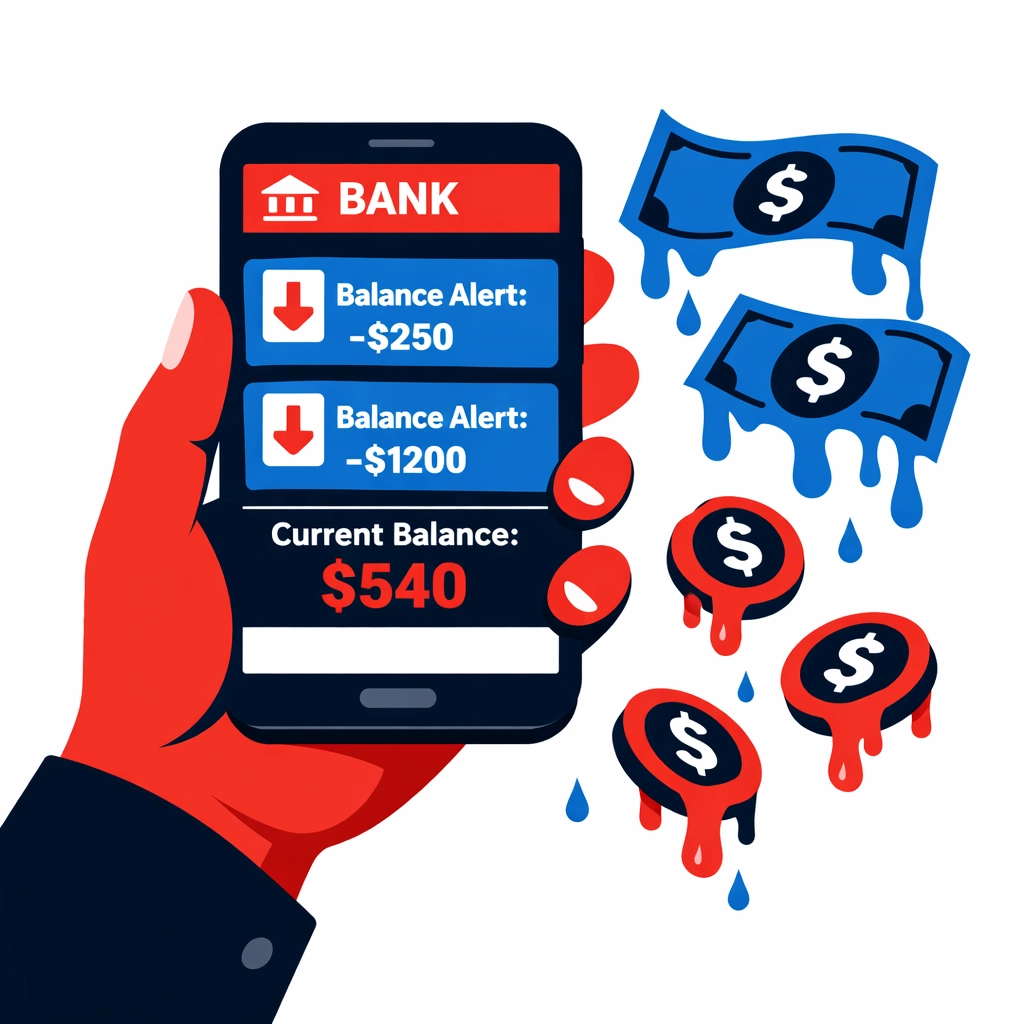
Mistake #1: The “Ostrich” Method
This is when you stick your head in the sand and ignore your bank statements. You avoid checking your balance. You delete the email alerts. You pretend everything is fine.
Sound familiar?
Ignoring your money does not make problems go away. It makes them worse. When you do not look at your bank account, you cannot see the small charges adding up. You miss overdraft fees. You do not notice subscriptions you forgot to cancel. You have no idea where your money actually goes.
The truth is simple: You cannot fix what you do not see. You cannot improve what you do not measure. Your bank statements show you the real story of your spending habits.
Start small. Check your account once a week. Look at your transactions. Notice patterns. Write down what surprises you. This simple step stops the bleeding in your leaky bucket.
Mistake #2: Thinking a Credit Card Is an Emergency Fund
Let’s be clear about something. A credit card is not an emergency fund. A credit card is debt waiting to happen.
Many people feel secure because they have a credit card with a $5,000 limit. They think this is their safety net. But here is what actually happens when an emergency strikes: You charge $2,000 for car repairs. You make minimum payments. The interest piles up. That $2,000 repair now costs you $3,000 or more.
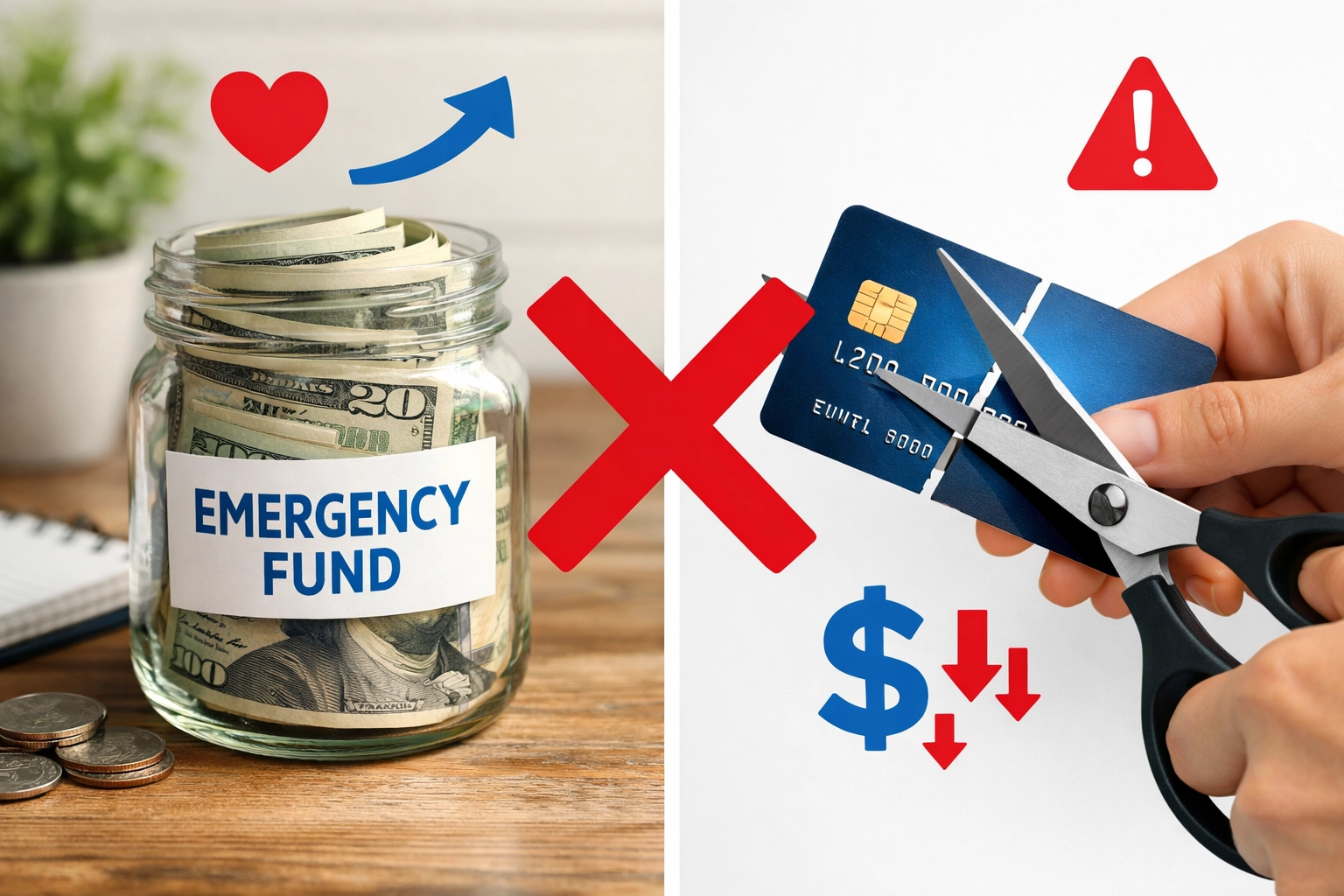
Real emergency funds work differently:
- They sit in a separate savings account
- They do not charge you interest
- They give you actual security
- They help you sleep better at night
Financial experts say you need three to six months of living expenses saved up. That sounds like a lot. Start with $500. Then build to $1,000. Keep going from there. Small steps add up.
Your credit card should be for building credit and earning rewards on purchases you already planned. It should not be your Plan A for emergencies.
Mistake #3: Insurance Ghosting
Insurance is confusing. Insurance is boring. So people do one of two things: They pay for coverage they do not need, or they skip coverage they absolutely must have.
This is what I call “Insurance Ghosting.” You are not fully present in your insurance decisions. You are going through the motions without understanding what you actually have.
Here are the common problems:
- Paying for duplicate coverage across multiple policies
- Missing critical protection like disability or life insurance
- Carrying high deductibles you cannot actually afford
- Never reviewing your policies as your life changes
- Letting auto-renew happen without checking for better rates
As an insurance agent, I see this every single day. People assume their employer coverage is enough. Or they bought a policy years ago and never looked at it again. Life changes. Your insurance should change with it.

Got married? Had a baby? Bought a house? Started a business? Your insurance needs are different now. Review your coverage every year. Make sure you have what you need and nothing you do not.
Mistake #4: The “Someday” Investment Strategy
“I’ll start investing when I make more money.”
“I’ll buy real estate when the market is better.”
“I’ll open a retirement account next year.”
Someday. Later. When things are perfect. This is the “Someday” Investment Strategy, and it is costing you thousands of dollars.
Here is why waiting hurts you: Time is your biggest advantage when investing. Compound growth works like magic, but only if you start. Someone who starts investing at 25 will have twice as much money at 65 compared to someone who starts at 35, even if they invest the same total amount.
The market is never perfect. Your income will never feel like enough. There will always be an excuse to wait. But every month you wait, you lose potential growth you can never get back.
You do not need to be rich to start investing. You can start with $25 a month. You can open a retirement account with your first paycheck. You can learn about real estate while renting. The perfect time is now.

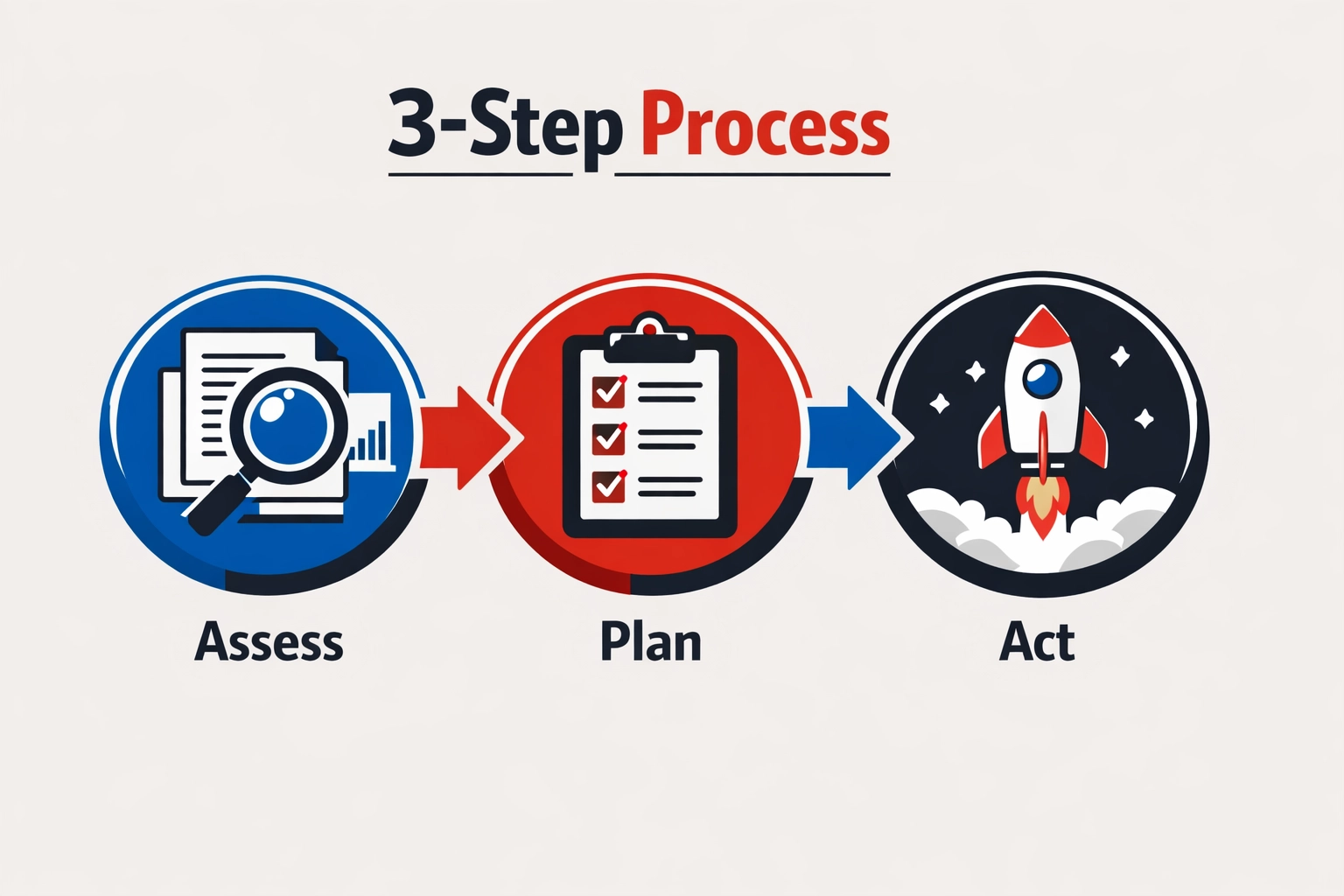
The Solution: My 3-Step Process
These money mistakes keep your bucket leaking. But there is a simple way to plug the holes. I use this 3-Step Process with every coaching client.
Step 1: Assess
Look at where you are right now. Check your bank statements. List your debts. Review your insurance policies. Calculate your monthly expenses. Write down your income. No judgment. Just facts.
This step shows you the leaks in your bucket. You cannot fix problems you have not identified yet.
Step 2: Plan
Create a simple plan to fix the biggest leaks first. Build your emergency fund. Review your insurance coverage. Set up automatic investments. Make a realistic budget you can actually follow.
Your plan does not need to be complicated. It needs to be clear. It needs to address your specific situation. It needs to be something you will actually do.
Step 3: Act
This is where most people get stuck. They assess. They plan. Then they do nothing. Action is what changes your money situation.
Start today. Open that savings account. Schedule the insurance review. Set up the automatic transfer to your investment account. Take one small step forward.
Then keep going. Review your progress monthly. Adjust your plan as needed. Celebrate small wins. Build momentum. Your future self will thank you.
Let’s Fix Your Money Mistakes Together
You have been working hard. You deserve to see that hard work pay off. You deserve financial security. You deserve a bucket that holds water instead of leaking it everywhere.
These four mistakes are common, but they do not have to be your story anymore. The Ostrich Method, the credit card emergency fund, Insurance Ghosting, and the Someday Investment Strategy: all fixable with the right guidance.
I help people just like you take control of their money through simple, practical coaching. No confusing jargon. No complicated strategies. Just real solutions that work for real life.
Ready to plug the leaks in your financial bucket? Book a coaching session and let’s build your personalized plan. We will assess where you are, create a simple roadmap, and help you take action today: not someday.
Your financial future starts with one decision. Make it today.